


Top Reasons to Buy the 2023 Hyundai Kona
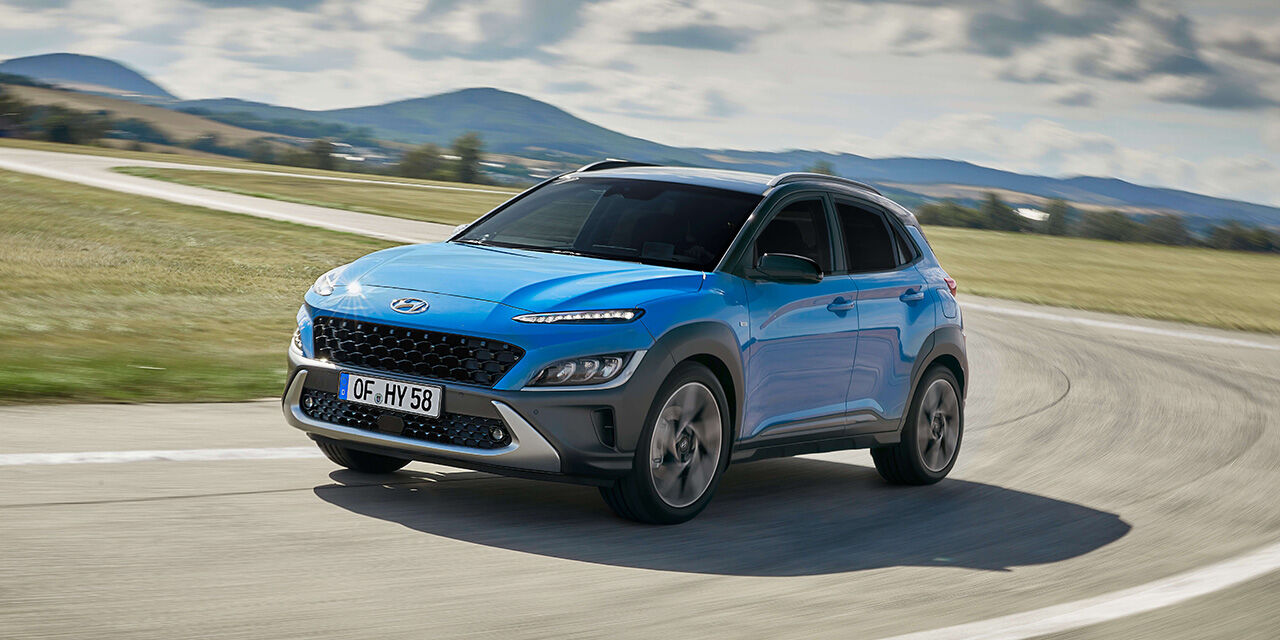
Photo Source/Copyright: Hyundai Motor Company
The 2023 Hyundai Kona was a spunky little runabout, serving as the last of the original design generation. It didn’t pretend to be a luxury cruiser, but it offered a deep bench of trim options. From a modest 147-horsepower 2.0-liter commuter engine up to the rowdy, 276-horsepower Kona N that had no business fitting into a subcompact crossover, it carved out a fiercely loyal following.
Then came the total redesign.
Park a 2023 model next to the newer generation, and the physical growth spurt is instantly obvious. Hyundai stretched the wheelbase from 102.4 inches to 104.7 inches and added nearly six inches to the overall length, bringing it to 171.3 inches. That might sound like simple spec-sheet math, but inside the cabin, those extra inches make a world of difference.
Where the Extra Inches Went
The older generation was known for cozy rear quarters, but the redesign addresses that space squeeze directly:
- Rear legroom jumped from 35.2 to 38.2 inches, giving passengers actual space to stretch out.
- Cargo volume behind the back seat expanded from 19.2 cubic feet to 25.5 cubic feet.
- Folding the rear seats opens up 63.7 cubic feet of maximum cargo capacity, a huge bump from the old 45.8 cubic feet.
This expanded footprint puts the new Kona squarely into compact SUV cargo territory while maintaining a small enough profile to slip into tight city parking spots without stress.
Ground Clearance and Real-World Grip
Let’s be realistic: nobody is taking a Kona rock crawling in Moab, and Hyundai isn’t marketing it as an off-road rig. Where it actually earns its keep is on gravel two-tracks, snow-covered driveways, and rutted trailhead parking lots.
Front-wheel-drive (FWD) configurations sit at a lower 6.7 to 6.9 inches of ground clearance. Selecting HTRAC all-wheel drive (AWD) raises ride height up to 8.3 inches compared to 6.7 inches on the 2023 AWD model. AWD setups also swap the standard torsion beam for an independent multi-link rear suspension, keeping tires planted firmly when road conditions turn rough.
Engine Options and Trim Pricing
The lineup covers two engines across four distinct trims, starting at $25,500 MSRP (excluding destination fee) for the base SE. The standard 2.0-liter engine delivers up to 35 miles per gallon (MPG) on the highway with FWD, keeping daily fuel costs down. For drivers seeking extra highway punch, the 1.6-liter turbocharged engine steps in on the upper trims.
*The MSRPs below exclude destination fees.
- SE ($25,500 MSRP): Powered by a 147-horsepower 2.0-liter engine paired with an Intelligent Variable Transmission (IVT).
- SEL Sport ($26,825 MSRP): Features the 147-horsepower 2.0-liter engine, adding heated front seats and a wireless phone charger.
- SEL Premium ($28,425 MSRP): Upgrades to a 190-horsepower 1.6-liter turbo with an 8-speed automatic, paddle shifters, and 19-inch wheels.
- Limited ($32,535 MSRP): Employs the 190-horsepower turbo engine along with dual 12.3-inch displays, Bose audio, ventilated seats, and a Surround View Monitor.
Standard Safety and Tech Upgrades
Inside the cabin, high-end technology comes standard rather than locked behind expensive upgrades. Every trim receives a 12.3-inch touchscreen featuring wireless Apple CarPlay and Android Auto. Standard safety equipment includes Forward Collision-Avoidance Assist, Smart Cruise Control with Stop & Go, Lane Following Assist, and Blind-Spot Warning systems.
While enthusiasts may miss the high-strung, 276-horsepower Kona N, the redesigned Kona trades track-focused stiffness for daily comfort, impressive rear cabin space, and practical technology.
Come see how much room the redesign really freed up. We have current Hyundai Kona trims ready to drive, and if a 2023 model is the one you’re after, ask about pre-owned inventory while you’re here.
More From Southern Hyundai Chesapeake
Everything About the Hyundai Elantra’s Horsepower Level
Photo Source/Copyright: Hyundai USA Compact sedans get lazily written off as commuter appliances. Glance under the hood of the Hyundai Elantra lineup, however, and that label quickly falls apart. Hyundai Elantra horsepower isn’t just a single spec-sheet figure; it’s a spread of four distinct engine choices tuned for completely different daily drives. Kicking off…
The New Hyundai Tucson Plug-In Hybrid Breakdown
Photo Source/Copyright: Hyundai USA Most days, a compact SUV handles the exact same short, unglamorous loop: school, office, grocery run, and home. The Hyundai Tucson plug-in hybrid is engineered around that exact cycle. It runs entirely on stored electricity until the battery taps out, then seamlessly switches over to gasoline without asking you…
The Right Hyundai Sonata Oil Type Explained
Photo Source/Copyright: Edmunds Overview: Oil by engine Grade requirements When to change Common questions The kind of oil you need for your Hyundai Sonata depends on the engine it has, since the three different engines have varying specifications; although two of them have the same displacement, they require different viscosities, and the hybrid…